
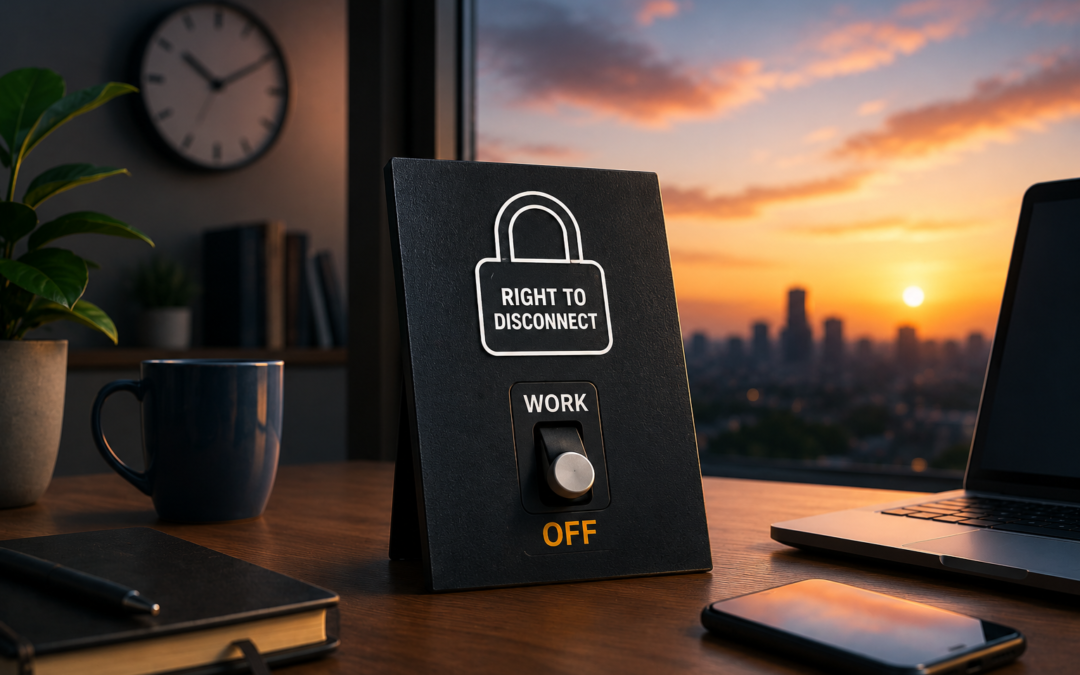
It is 10:37 PM on a Tuesday. Your manager has just sent a voice note asking for an update on a report you thought you had already submitted. Three colleagues have pinged you on WhatsApp. Your work email shows fourteen unread messages that came in after dinner. For millions of professionals in India, this is not an unusual evening. It is just Tuesday.
India has long accepted work without edges as normal. According to the International Labour Organization (ILO), more than half of India's workforce regularly works over 49 hours a week, placing the country among the highest globally for long working hours. Burnout is following closely behind: a 2022 global survey by Deloitte found that close to 77% of respondents had experienced burnout in their current job, with employees in fast-growing economies like India among the most affected. The always-on culture is not a quirk of a few demanding companies. It is an unspoken rule embedded across sectors, from IT services to financial institutions to manufacturing. In 2026, it has finally attracted serious legislative attention.
The Bill That Started the Conversation
The Right to Disconnect is not a new idea in Indian policy circles. Member of Parliament Supriya Sule first introduced a Right to Disconnect Bill in the Lok Sabha back in 2018, proposing legal protection for employees from employer-initiated calls, messages, and emails outside designated working hours. The bill called on employers to draft clear internal communication policies, respect employees' right to decline after-hours contact, and create a structured dispute resolution mechanism for employees who face pressure outside work hours.
The bill did not advance at the time, as private member's bills in India historically have a low success rate in the legislative calendar. But Sule renewed the push in 2025, and the conversation it has reignited is different this time. Burnout data has hardened. Global precedents have multiplied. France made the right to disconnect a legal obligation for companies with over 50 employees back in 2017. Australia enacted its own right to disconnect law in August 2024, giving employees the legal right to refuse unreasonable contact outside working hours. Closer to India's economic model, several large companies in the UAE and Singapore have introduced formal after-hours communication policies under regulatory encouragement.
In the US, there is no federal right to disconnect law yet, though New York City considered a local ordinance in 2021 that would have required employers to let workers ignore after-hours communications. The discussion has since continued at state levels, with worker advocacy groups pushing for legislative action. For US-based multinationals operating Global Capability Centres (GCCs) in India, this is not just an Indian HR issue. It is a global workforce management challenge.
Why the Conversation Has Finally Arrived
Three things have come together in 2026 to make the right to disconnect a live policy issue rather than an academic discussion.
The first is the mental health data. The WHO's guidelines on mental health at work identified "long, unsocial or inflexible hours" as one of the primary psychosocial risks to employee wellbeing. Globally, an estimated 12 billion working days are lost every year to depression and anxiety, at a cost of roughly $1 trillion in lost productivity, according to the WHO. In India specifically, the IT and services sector has seen a sustained increase in stress-related consultations through Employee Assistance Programmes, a trend that has not meaningfully tapered since the pandemic years.
The second driver is India's multi-time-zone work reality. Indian GCCs and IT services companies serve clients across the US, Europe, and the Asia-Pacific. That creates a structural mismatch: an employee based in Bengaluru or Hyderabad can be expected to take calls from a US client at 9 PM Indian time, while also being available for a morning stand-up with a UK team. Without formal policies, this scheduling pressure falls entirely on individual employees to absorb.
Third, the war for talent has made employee wellbeing a competitive issue. Gallup's research on employee burnout shows that only 20% of employees globally are engaged at work, while 40% of the global workforce experienced significant stress on a daily basis in 2025. Companies that ignore after-hours boundaries are not just risking burnout. They are accelerating voluntary exits at a time when replacing a skilled professional costs significantly more than retaining one.
What Indian Companies Are Getting Wrong
The typical Indian company response to overwork has been to layer wellness benefits on top of an unchanged structural problem. Meditation app subscriptions, yoga subsidies, and mental health days are genuinely well-intentioned, but they sit on top of an underlying expectation of after-hours availability that remains completely intact. Giving an employee a wellness benefit while messaging them at midnight is performative care, not systemic change.
The deeper issue is cultural. In many Indian workplaces, being visibly available outside working hours signals dedication, and that signal gets picked up in performance reviews and promotion decisions. This creates a difficult dynamic: employees who disconnect appropriately risk being perceived as less committed, even when their output is objectively equivalent or better than peers who stay online late. HR leaders who have tried to introduce formal work-hour policies without simultaneously changing how dedication is measured have found those policies quietly ignored within weeks.
Fixing this requires three structural interventions. First, explicit manager training that reframes boundary-crossing communication as a people management risk rather than a personal habit or a sign of drive. Second, measurement: most organisations have no visibility into after-hours communication patterns, and those that do rarely hold managers accountable for them in any formal way. Third, credible modelling from leadership. When senior leaders demonstrably disconnect, when the CHRO does not send weekend emails, when the CEO explicitly recognises managers for protecting team recovery time, the permission structure changes for everyone below them.
The Business Case for Boundaries
The economic argument for after-hours work boundaries is clear and increasingly well-evidenced. Research by Stanford economist John Pencavel found that worker output per hour falls sharply when people work more than 49 hours per week, and that someone working 70 hours produces no more than someone working 55. Recovery time is not optional. It is when consolidation, creativity, and decision-making capacity are rebuilt.
Gallup's research reinforces this from a retention angle. Employees who very often or always feel burned out are 74% more likely to be actively looking for another job. Given that Gallup estimates replacing a technical professional costs roughly 80% of their annual salary, and a leader or manager up to 200%, the financial case for protecting employee recovery time is not soft. It is a balance sheet issue.
For US companies running Indian GCCs, there is an additional layer of accountability. Investors and ESG frameworks increasingly scrutinise employee wellbeing as a governance metric. Demonstrating responsible workforce practices in offshore locations is no longer just good ethics. It is reputational management.
Building a Right-to-Disconnect Policy That Works
For HR leaders ready to act, the building blocks of an effective policy are well established. The policy must define what constitutes a genuine emergency and set agreed exception criteria. One of the most common failures of these policies is that the absence of clear exceptions means any escalation gets treated as an emergency, which quickly erodes whatever protection the policy was meant to provide.
Clear response-time expectations should be set for each communication channel. A policy that explicitly states that emails sent after 7 PM do not require a response until 9 AM the following working day gives clear guidance to both the sender and the receiver. It also removes the guilt that employees often feel about not responding, which is what makes the policy real rather than symbolic.
The policy must apply consistently across seniority levels. A policy that applies to junior employees but not to senior management has already failed on the day it is published.
After-hours communication norms should be tied to manager scorecards, reviewed in engagement surveys, and tracked as a measurable people metric. If patterns persist despite the policy, that is a manager accountability conversation, not a cultural shrug.
What 2026 Will Settle
The Right to Disconnect Bill is unlikely to become formal statute in its current form in the near term. India's legislative process for private member's bills is slow, and the bill faces real complexity around sector-specific carve-outs, enforcement mechanisms, and definitions of what counts as unreasonable contact. But the conversation it has catalysed is already changing practice.
Large Indian IT companies are beginning to publish after-hours communication guidelines. GCCs are auditing shift structures to find coverage solutions that reduce individual overwork. Progressive HR teams are experimenting with weekend communication blackout policies and reporting that both productivity and morale improve as a result.
The regulatory direction of travel is clear. As India continues to align its labour frameworks with international standards, and as talent markets increasingly treat employee protection as a baseline expectation rather than a differentiator, some form of legally recognised after-hours work protection will eventually arrive. The question for HR and business leaders is not whether. It is whether they will be architects of that shift or reactive followers of it.
For India's workforce, the right to disconnect is not about working less. It is about working sustainably. And for the US multinationals and GCCs who employ a significant share of India's professional workforce, it is about recognising that the people driving their global operations have a reasonable expectation of being able to put the phone down at night without professional consequences. 2026 may not be the year the law passes. But it may well be the year that expectation starts being taken seriously.